AI training · AI agents · AI for growth
AI that moves your revenue.
AI training, agents and automation for leadership teams. Grounded in hands-on strategy and marketplace work. Previously at Delivery Hero, Foodpanda, Daraz, Telenor and Jazz. MBA, LUMS.
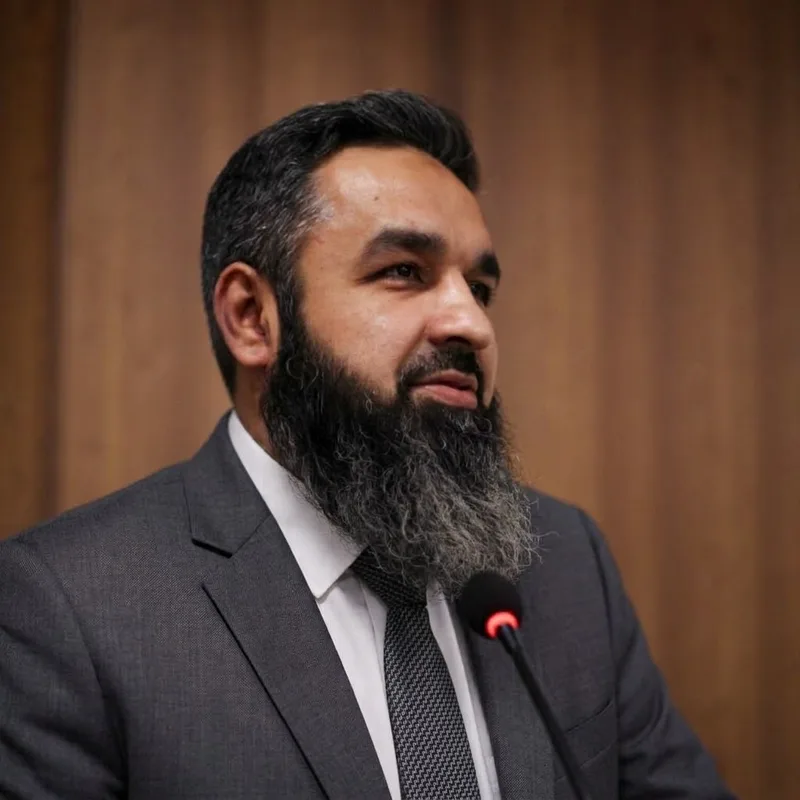
About
Umar Muhammad Sharif
MBA, LUMS. Previously at Delivery Hero, Foodpanda, Daraz, Telenor and Jazz. Most recently Fractional Head of AI and Transformation at Sarmaaya Financials.
The 28-second version
40 pilots.
0 owners.
Built inside
Delivery Hero
Foodpanda
Daraz
Telenor
Jazz
Sarmaaya
Lead calls in.
Assalam o alaikum, portfolio track karna hai
Intent: portfolio_tracking
Score 0.87 → route: sales
The review.
Goal
Workflow
Data
Owners
Controls
Evidence
The system.
Result
93×
lift in payment likelihood after portfolio setup
Umar M. Sharif · AI transformation
Book a 30-min intro call
umarmsharif@gmail.com
01 Problem
02 Proof
03 Call
04 Review
05 System
06 Result
07 Book
What I help with
Six ways I put AI to work.
Want to talk through where AI fits? Book a call. No project needed.
01
AI training for teams
Sessions built on your team's own work, from first prompts to daily use.
02
Voice and chat agents
Agents that answer, qualify and book, in Urdu, Roman Urdu or English.
03
AI for growth
Use AI to find where the funnel loses people and pick the next channel to test.
04
AI market research
Faster market sizing, customer interviews and competitor reads, checked by hand.
05
AI in operations and analytics
Automate the reporting and routine steps, so people work on the exceptions.
06
Strategy for where AI fits
Which workflows to start with, who owns them, and how we know it worked.
4 ways I work with you on AI.
01 / 04
01
Voice and chat agents
Use-case design, guardrails and production routing for agents that qualify and answer leads.
02
AI roadmaps
A look at where AI helps the business, then a roadmap with owners, controls and proof it works.
03
AI personal productivity
Research, writing, meetings and decisions redesigned around AI workflows.
04
AI training for leaders and teams
AI fluency built on their own work, including the Hands-on AI for leaders programme.
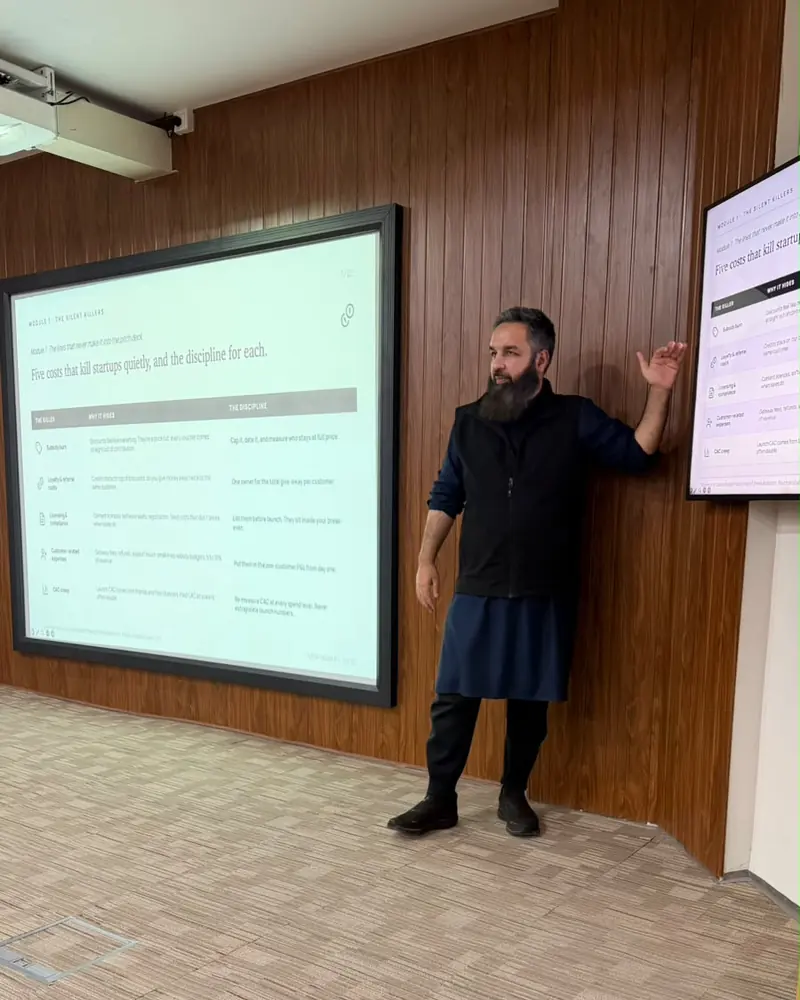
Teaching
AI readiness check
How ready is your team for AI?
15 questions, about 4 minutes. A score for 6 areas, from leadership intent to change capacity, and the next step for your 2 weakest.
Sarmaaya
Case · Sarmaaya Financials · Apr–Jul 2026
Fractional Head of AI and Transformation for a PSX-authorized fintech.
Built a three-layer revenue system roadmap, a Gemini and FastAPI lead-qualification agent in Urdu, Roman Urdu and English, and the install-behaviour analysis that linked portfolio creation to payment.
93×
lift in payment likelihood after portfolio setup
foodpanda
Foodpanda Pakistan
+18%
orders from AI dish descriptions
−33%
partner fail rates
−30%
order delays
Selected work
Analysis, flagship roles and case studies.
5 case studies.
Food deliveryMarketplaces
AI agent build
An Urdu voice agent that books the meeting
Calls restaurant owners in Pakistani Urdu, answers their questions and books a sales meeting in the calendar during the call.
Read the case →
Telecom
TelenorJazz
Loyalty, personalisation and offer design at national scale
Personalised offers lifted ARPU 5% against a control group, and the offer-pitch analysis found under-pitched offers converting better.
Read the case →
Fintech
Diagnosis
The activation bottleneck
Install-to-paid funnel diagnosis and a 5-stage operating model with owners and targets.
Read the case →
MarketplacesFood delivery
Programme design
The first 60 days
An incubation programme for new vendors across 18 markets, with org options, graduation thresholds and OKRs.
Read the case →
HR services
Research
Where the AI gain lands
Measured AI effects from −19% to +35%, role exposure and pricing for a headcount-priced services firm.
Read the case →
Recommendations
What people I worked with say.
Under Umar’s leadership, we fundamentally redesigned the role of Vendor Operations. … The results spoke for themselves: Vendor NPS improved 5x, escalations reduced by 70%, and service levels improved materially.
Director Commercial, foodpanda
LinkedIn recommendation
Then he gave us a strategy that actually made sense and was doable, not just theory. One thing I really appreciated was how he showed us the way AI could help us turn leads into actual paying customers.
Founder, Sarmaaya.pk
LinkedIn recommendation
How I work
Look first. Then design, build, train and hand over.
The same sequence I used on the Urdu voice agent: find the step that costs the most, fix that one, and leave your team able to run it.
01
Look
I map how the work runs today, where time and money go, and which step is worth changing first.
02
Design
I define what the system does, what it must never do, and how we will know it works.
03
Build
I build a working version against real cases, then test it on written scenarios before anyone relies on it.
04
Train
Your team learns to use it, check it and improve it, with sessions built on their own work.
05
Hand over
You get the system, the documentation and the settings, running in your own accounts.
What I bring
Analysis
Funnels, segments and call outcomes read from your data, so we start with the problem worth solving.
Process mapping
Each step, owner and hand-off written down before anything gets automated.
Building AI agents
Voice and chat agents that speak Urdu, Roman Urdu and English and connect to your calendar, sheets and email.
Training teams
Hands-on sessions so the people who own the work can run and adjust the agent themselves.
How I build a decision deck
A deck exists to move one decision. Everything else follows from that.
Strategy work usually ends in a board or leadership deck. I build every one the same way, and the argument is settled before a single slide is designed.
01
Frame the problem
Who reads it, what they already believe, and the one decision we want after the last slide. Every slide has to support that sentence.
02
Set the storyline
Pick how the argument opens: answer first for a busy board, or situation, complication, then answer when the room needs the tension.
03
Ghost deck
One row per slide: the headline finding and the layout, nothing more. If the headlines read top to bottom don't tell the story, we fix it here, before anything is built.
04
Write the slides
Each slide states its finding in the title, then proves it with one chart or diagram, a line of context and a named source.
05
Review
Read the titles alone. Check every claim against the evidence, one point of emphasis per slide, no filler words.
06
Deliver
An editable PowerPoint your team can keep using. The last slide is the ask or the next step.
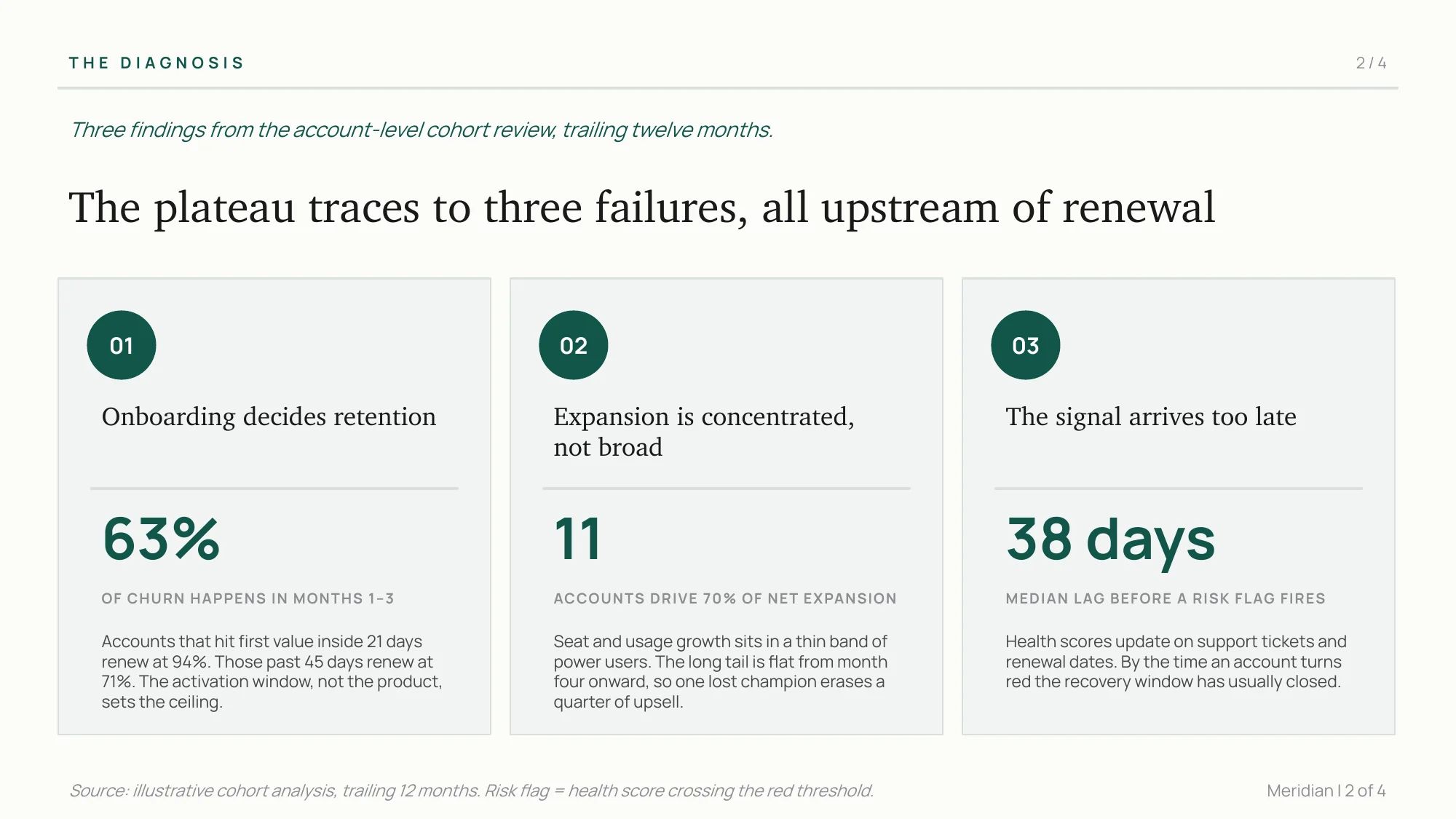
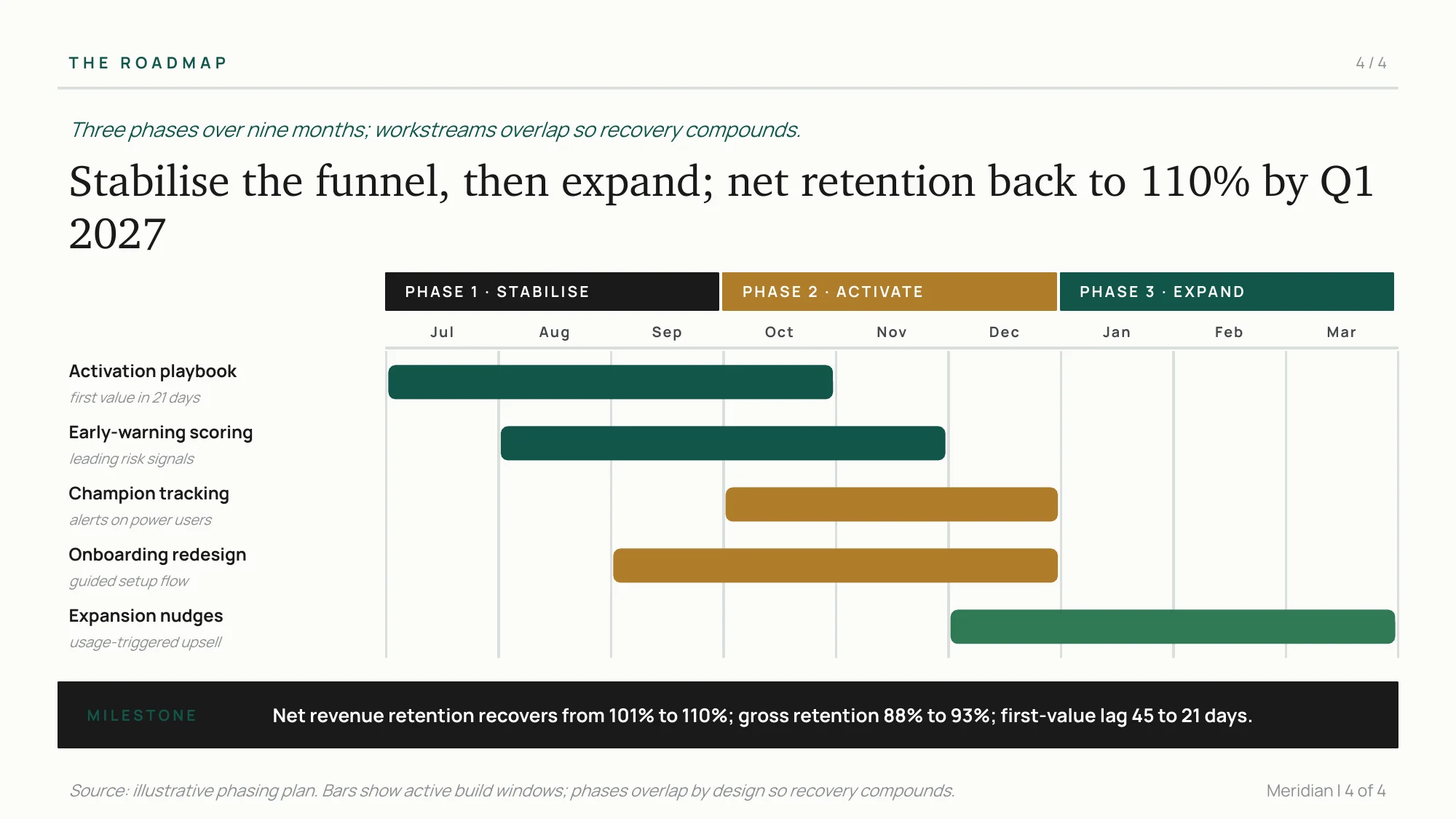
Sample slides from a demo deck. The company and figures are fictional.
Tools I use with clients
Claude skills I've built
I write my consulting methods down as Claude skills, so the same steps run every time, for me and for the teams I train.
Mental models
Tests a plan or decision against about 60 mental models. A panel of reviewers argues the case from different angles, then you argue back until it commits to a clear position.
Presentation consulting
Turns a brief into a strategy deck that reads like a consultant made it. It agrees the audience, the decision and a slide-by-slide outline first, then builds an editable PowerPoint with headline titles and honest charts.
Sarmaaya bot
A chat assistant for Sarmaaya, a Pakistani investment research platform. It explains stocks, mutual funds, the PSX, gold rates and investing basics in Urdu, Roman Urdu and English, and passes interested users to the sales team.
3 moves. 30 minutes to start.
1
Book a call
Bring one problem you want to move. A question is enough.
2
Look at how it runs
Goals, workflow, data, ownership, controls and evidence.
3
Pick the next move
Leave with the highest-value constraint and one action.
Let's find your highest-value AI move.
Book a 30-min intro callOr email umarmsharif@gmail.com · LinkedIn